How to Choose the Right Cable Gland: Nylon, Brass, Standard or Explosion-Proof?
How to Choose the Right Cable Gland: Nylon, Brass, Standard or Explosion-Proof?
Selecting the right cable gland is essential for ensuring safe, reliable, and long-lasting cable installations. Using the wrong type of cable gland can lead to water ingress, corrosion, cable damage, equipment failure, and costly maintenance.
With so many options available—including nylon cable glands, brass cable glands, standard cable glands, and explosion-proof cable glands—many engineers and purchasing professionals are unsure which solution best fits their application.
This guide explains the key factors to consider when choosing a cable gland and helps you identify the best option for indoor, outdoor, industrial, and hazardous environments.
1. Start with the Installation Environment
The first and most important consideration is where the cable gland will be installed.
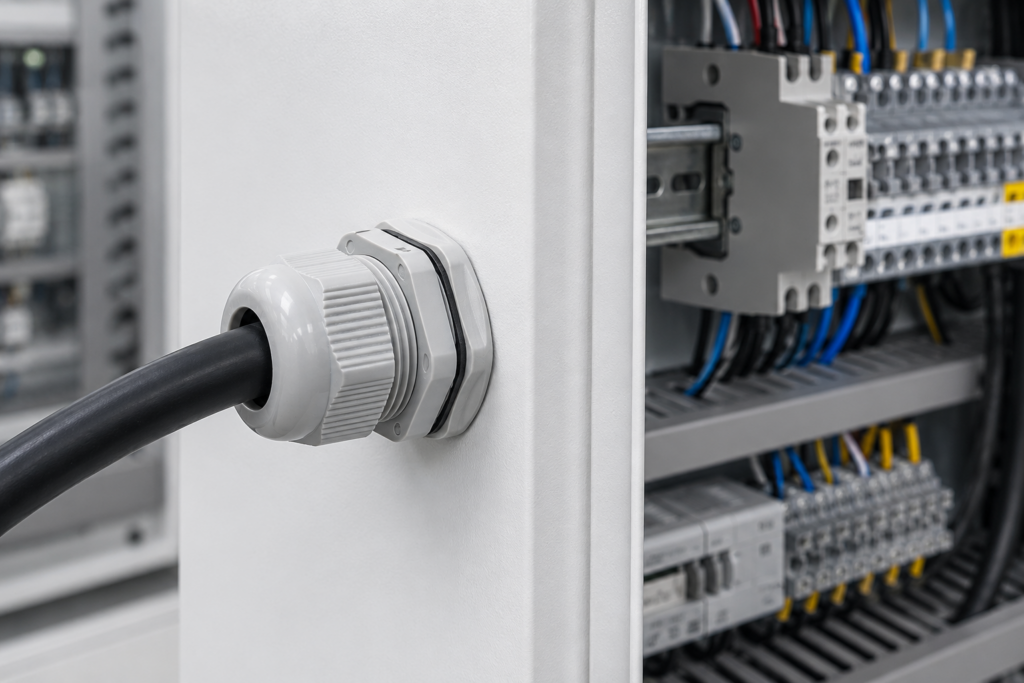
Indoor Applications
Typical indoor installations include:
- Control panels
- Distribution boards
- Automation cabinets
- Machinery wiring
For these applications, nylon cable glands are often the preferred choice.
Benefits include:
- Lightweight construction
- Corrosion resistance
- Easy installation
- Cost-effective pricing
- Suitable for most electrical enclosures
Recommended Solution: Nylon Cable Glands
Outdoor Applications
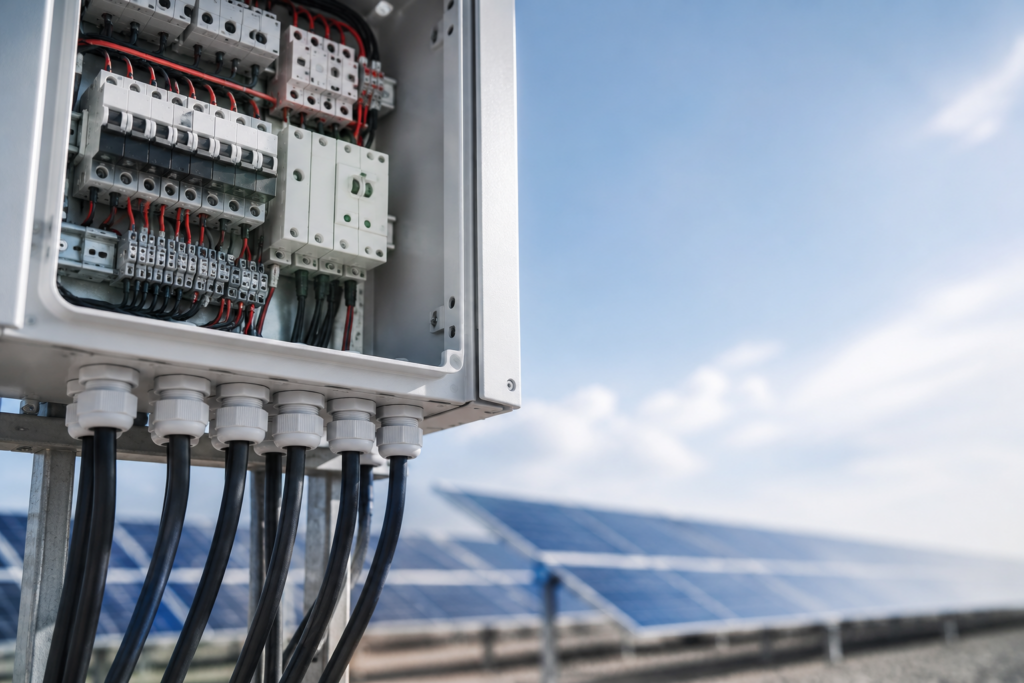
Outdoor installations face additional challenges such as:
- Rain
- UV exposure
- Dust
- Temperature changes
Examples include:
- Solar power systems
- CCTV installations
- Outdoor lighting
- Telecommunications cabinets
In these environments, UV-resistant nylon cable glands or brass cable glands are commonly used.
Recommended Solution: UV Resistant Nylon or Brass Cable Glands
Harsh Industrial Environments
Some applications require higher mechanical strength and corrosion resistance.
Examples include:
- Chemical plants
- Marine installations
- Water treatment facilities
- Heavy industrial equipment
Brass cable glands provide superior durability and are often preferred in demanding environments.
Recommended Solution: Nickel-Plated Brass Cable Glands

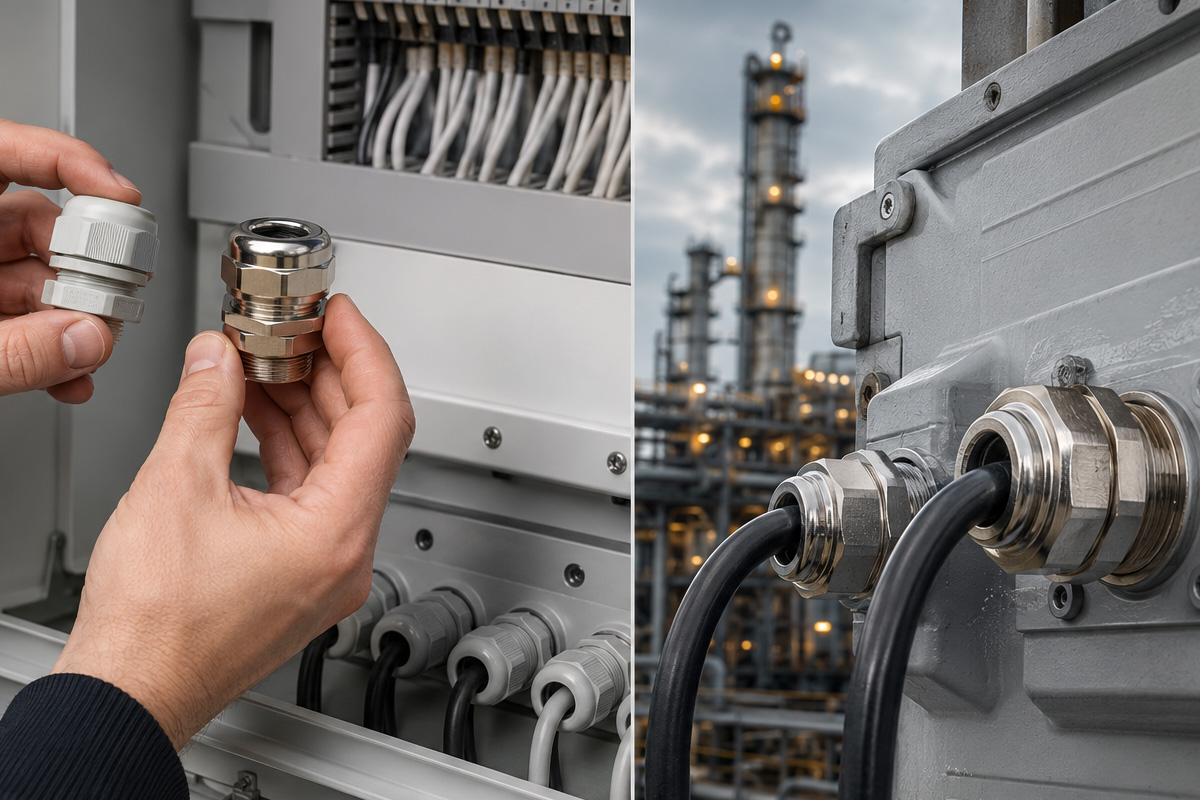
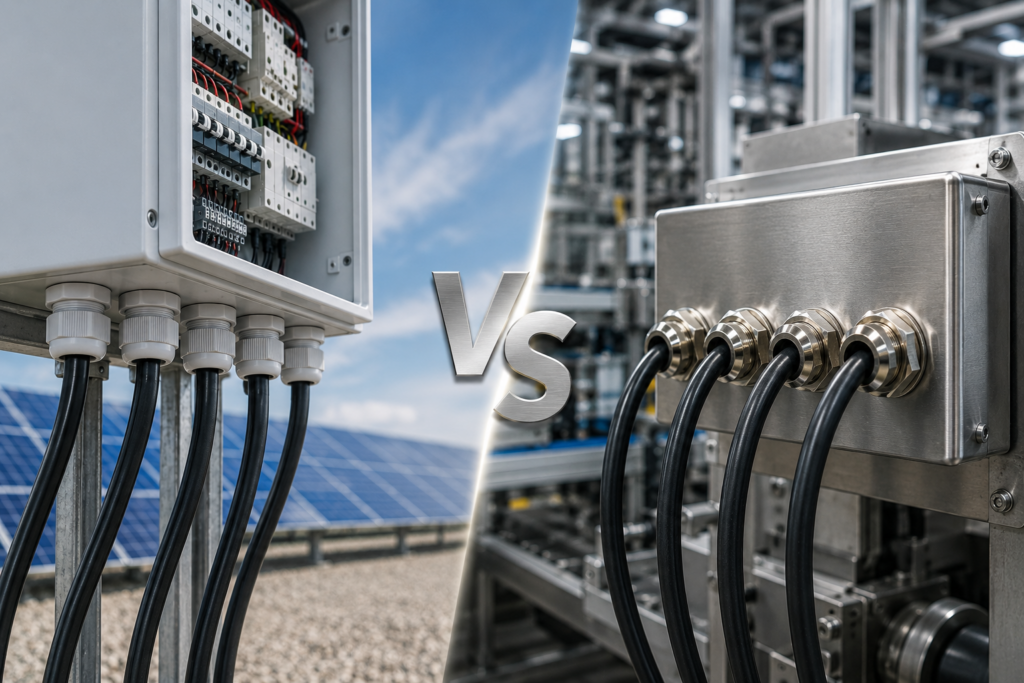
2. Nylon vs Brass Cable Glands
One of the most common questions is whether to choose nylon or brass cable glands.
| Feature | Nylon Cable Gland | Brass Cable Gland |
|---|---|---|
| Cost | Lower | Higher |
| Weight | Lightweight | Heavier |
| Corrosion Resistance | Excellent | Excellent |
| Mechanical Strength | Good | Excellent |
| Outdoor Durability | Good | Excellent |
| Industrial Duty | Medium | Heavy Duty |
Choose Nylon Cable Glands When:
- Budget is important
- Installation is indoors
- Plastic enclosures are used
- General industrial applications are involved
Choose Brass Cable Glands When:
- Maximum durability is required
- Metal enclosures are used
- Outdoor conditions are severe
- Mechanical protection is critical
3. Check the Required IP Rating
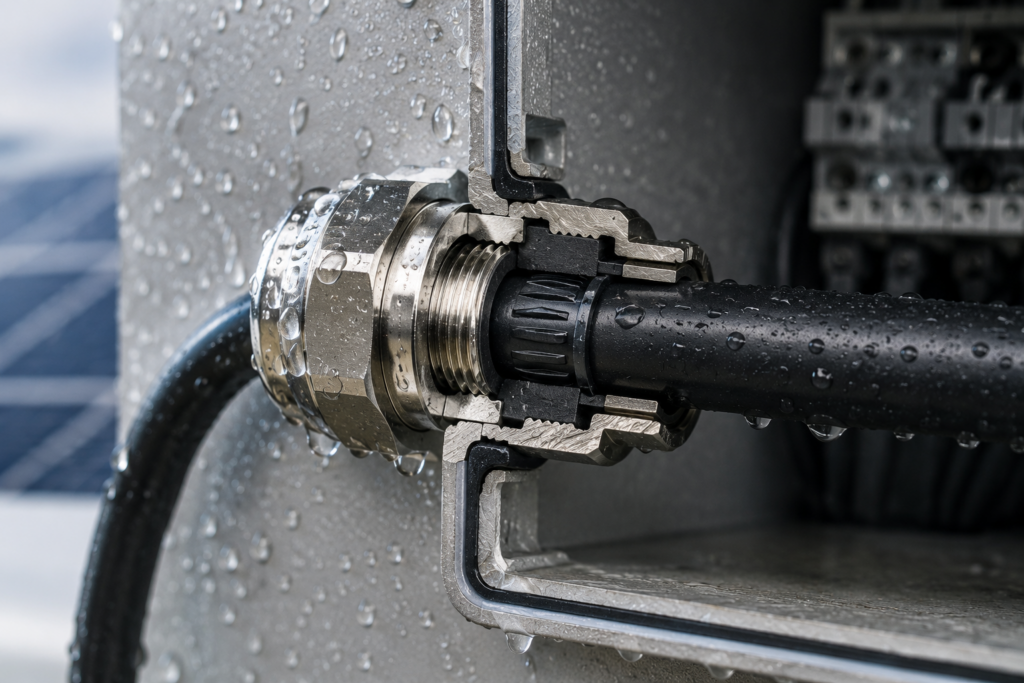
A cable gland’s IP rating indicates its level of protection against dust and water.
| IP Rating | Protection Level |
|---|---|
| IP54 | Splash and dust protection |
| IP65 | Dust-tight and water jets |
| IP67 | Temporary immersion |
| IP68 | Continuous water protection |
For most outdoor and industrial applications, IP68 cable glands are recommended because they provide the highest level of sealing performance.
When selecting a cable gland, always verify that the IP rating matches the environmental requirements of your project.
4. Do You Need an Explosion-Proof Cable Gland?
In hazardous areas, standard cable glands are not sufficient.
Explosion-proof cable glands are specifically designed to prevent sparks, flames, or explosive gases from traveling through cable entry points.
These cable glands are commonly used in:
- Oil and gas facilities
- Petrochemical plants
- Mining operations
- Offshore platforms
- LNG terminals
Many explosion-proof cable glands are certified to international standards such as ATEX and IECEx.
Standard vs Explosion-Proof Cable Glands
| Feature | Standard Cable Gland | Explosion-Proof Cable Gland |
|---|---|---|
| General Industrial Use | Yes | Yes |
| Hazardous Areas | No | Yes |
| ATEX Certification | No | Yes |
| IECEx Certification | No | Yes |
| Cost | Lower | Higher |
Recommended Solution: Explosion-Proof Cable Glands for Zone 1, Zone 2, Zone 21, and Zone 22 hazardous areas.

5. Quick Cable Gland Selection Guide
Use the table below as a quick reference when selecting cable glands
| Application | Recommended Cable Gland |
|---|---|
| Electrical Control Panel | Nylon |
| Distribution Board | Nylon |
| Solar Power System | UV Resistant Nylon |
| Outdoor Equipment | Brass |
| Marine Installation | Brass |
| Chemical Plant | Brass |
| Oil & Gas Facility | Explosion-Proof |
| Mining Industry | Explosion-Proof |
| Hazardous Areas | Explosion-Proof |
Conclusion
Choosing the right cable gland depends on four key factors:
- Installation environment
- Material requirements
- IP protection level
- Hazardous area classification
For most indoor applications, nylon cable glands provide a reliable and economical solution. For demanding industrial and outdoor environments, brass cable glands offer greater strength and durability. Where explosive gases or dust may be present, certified explosion-proof cable glands are essential for safety and compliance.
By carefully evaluating your application requirements, you can ensure long-term cable protection, improved reliability, and reduced maintenance costs.
Cable gland protection levels are commonly classified according to IEC ingress protection standards.