WAGO Connectors vs Traditional Wire Nuts: Which Is Better for Modern Electrical Wiring?
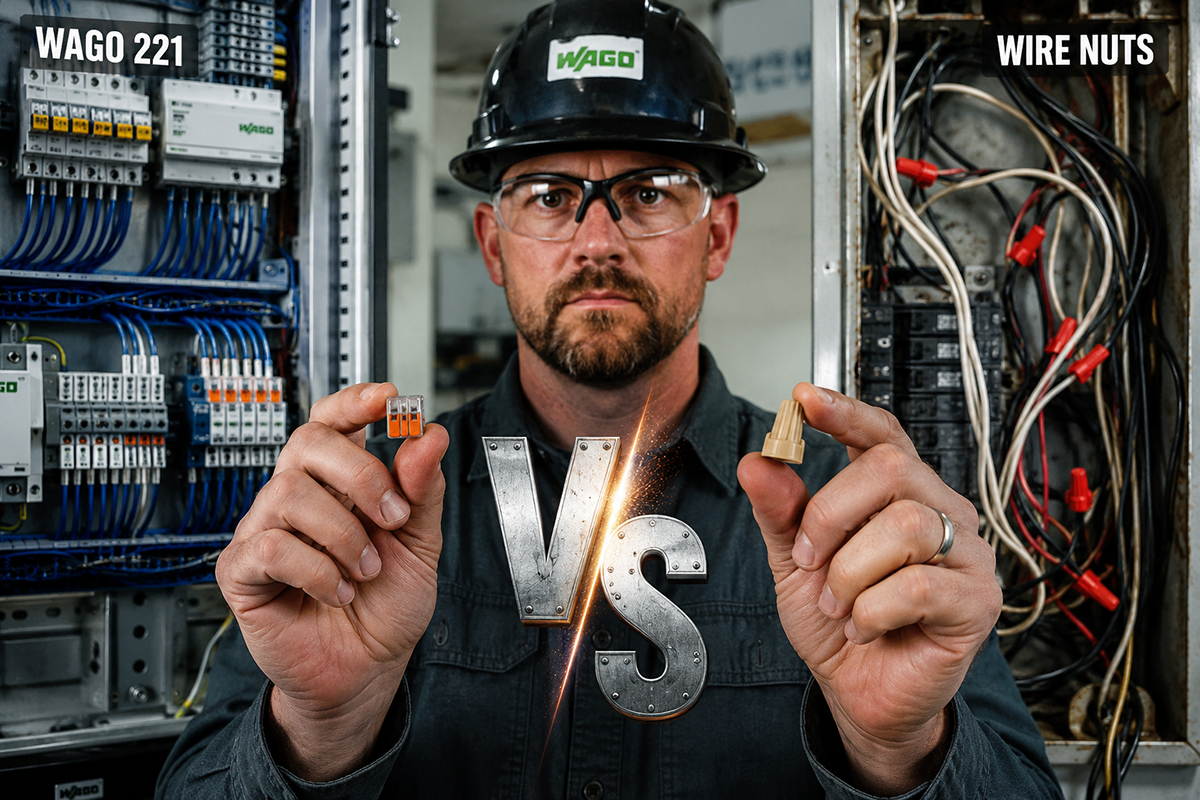
When it comes to connecting electrical wires, two solutions dominate the market: WAGO connectors and traditional wire nuts. Both are widely used, but they differ significantly in installation, maintenance, reliability, and long-term performance.
If you’re a homeowner, electrician, panel builder, or industrial engineer, understanding these differences can help you choose the right connector for your project.
What Are WAGO Connectors and Wire Nuts?
Traditional wire nuts have been used in North American electrical installations for decades. They connect conductors by twisting wires together and securing them with an insulated cap.
WAGO connectors use spring-clamp technology to create a secure electrical connection without twisting the wires. Popular models include the WAGO 221, 222, and 2273 series.
Quick Comparison
| Feature | WAGO Connectors | Wire Nuts |
|---|---|---|
| Installation Speed | Fast | Moderate |
| Reusable | Yes | No |
| Maintenance | Easy | Difficult |
| Learning Curve | Low | Moderate |
| Cost per Piece | Higher | Lower |
| Industrial Applications | Excellent | Limited |
Installation Speed: Which Is Faster?
For many electricians, time equals money.
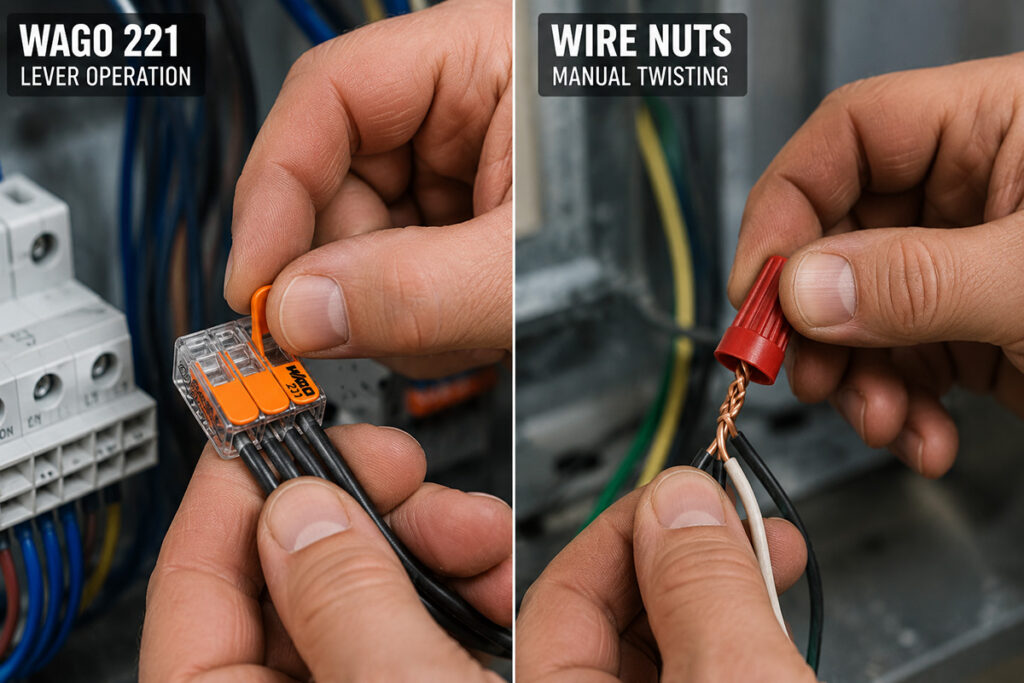
With a WAGO connector, the process is simple:
- Strip the wire
- Open the lever
- Insert the conductor
- Close the lever
The connection is complete within seconds.
Wire nuts require aligning conductors, twisting wires correctly, installing the connector, and performing a pull test. This takes more time and experience.
Winner: WAGO Connectors
They significantly reduce installation time, especially when working on control panels or large projects.
Ease of Use for Beginners
Many connection failures occur because of improper installation.
Wire nuts require proper wire alignment and twisting technique. If installed incorrectly, loose connections can occur.
WAGO connectors eliminate much of the guesswork. The transparent housing allows users to visually verify conductor insertion.
For DIY users and beginners, WAGO connectors are generally easier and safer to use.
Winner: WAGO Connectors
Connection Reliability
Electrical connections must remain secure for years.
Traditional wire nuts rely heavily on installation quality. Two electricians may achieve different results.
WAGO connectors use stainless steel spring-clamp technology that maintains consistent pressure on the conductor over time.
This makes them especially suitable for:
- Industrial automation
- Electrical control panels
- OEM equipment manufacturing
- Vibration-prone environments
Winner: WAGO Connectors
Reusability and Maintenance
Maintenance is where WAGO connectors truly shine.
Need to add a wire?
Need to troubleshoot a circuit?
Need to replace a component?
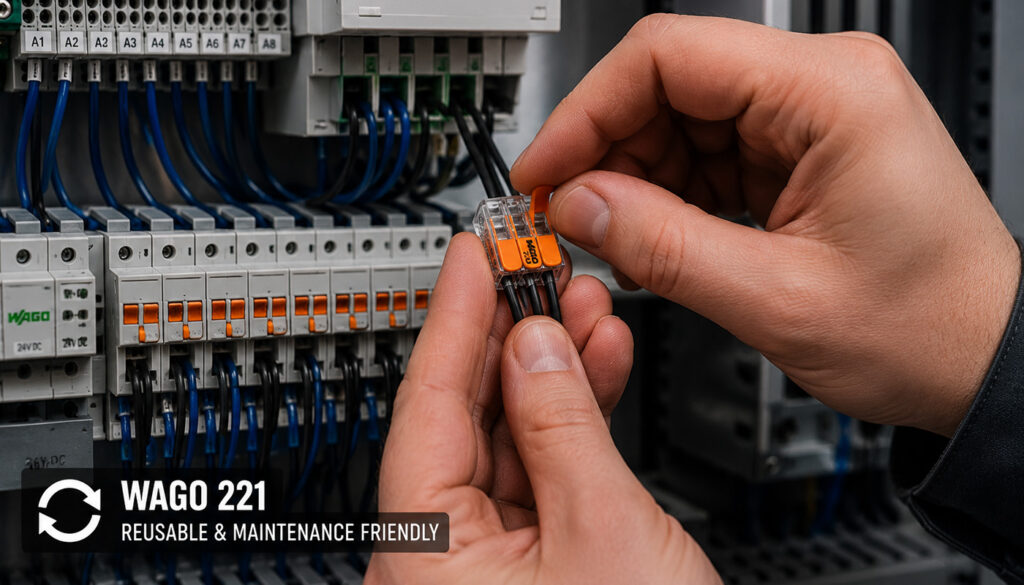
Simply open the lever and remove the conductor.
Wire nuts usually require disassembly and reinstallation, which can damage conductors and increase maintenance time.
For service technicians and maintenance engineers, reusable connectors offer a major advantage.
Winner: WAGO Connectors
Best Applications for WAGO Connectors
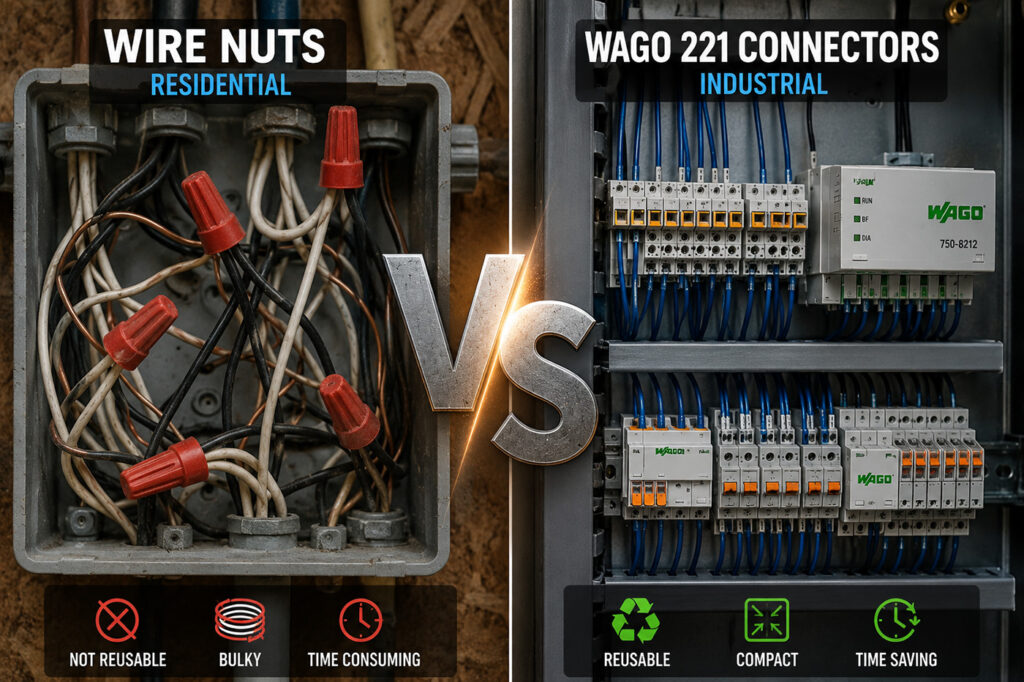
While traditional wire nuts remain common in residential wiring, WAGO connectors have become increasingly popular in modern electrical installations due to their speed, reliability, and ease of maintenance.
WAGO lever connectors are particularly suitable for industrial control panels, automation systems, and commercial electrical projects where frequent testing, troubleshooting, or wire replacement may be required. Because the connection can be opened and closed without damaging the conductor, maintenance work becomes much faster and safer.
They are also widely used in solar power systems, LED lighting installations, HVAC equipment, and electrical distribution cabinets. In these applications, consistent connection quality and vibration resistance are important factors that contribute to long-term reliability.
For electricians and maintenance technicians, WAGO connectors offer a practical solution for temporary wiring, equipment upgrades, and field repairs. Their transparent housing also allows visual inspection of conductor insertion, reducing the risk of improper connections.
When speed, safety, and reusability are priorities, WAGO connectors are often the preferred choice over traditional wire nuts.
Space Efficiency
Modern electrical enclosures are becoming smaller and more compact.
Many WAGO connectors occupy less space than large wire nut assemblies, particularly inside control cabinets and junction boxes.
For panel builders and machine manufacturers, compact wiring often translates to better organization and easier maintenance.
Cost Comparison
This is often the deciding factor.
Wire nuts are generally cheaper on a per-piece basis.
Typical costs:
- Wire Nut: Low
- WAGO Connector: Higher
However, material cost is only part of the equation.
Labor costs, installation speed, troubleshooting time, and future maintenance should also be considered.
In industrial applications, the total installed cost often favors WAGO connectors despite their higher purchase price.
Winner for Initial Cost: Wire Nuts
Winner for Total Ownership Cost: WAGO Connectors
Safety and Certifications
Both products can be extremely safe when installed correctly.
WAGO connectors and quality wire nuts are available with certifications such as:
- UL
- CSA
- CE
- IEC standards
Always select connectors that comply with local electrical regulations and installation requirements.
Many WAGO connectors are certified according to UL 486C requirements for electrical splicing connectors.
Best Applications
Choose WAGO Connectors If:
- You work with electrical control panels
- You build automation equipment
- You need fast installation
- Future maintenance is expected
- You want reusable connections
Choose Wire Nuts If:
- You are working on traditional residential wiring
- Budget is the primary concern
- Existing installations already use wire nuts
- Local practices strongly favor wire nuts
Final Verdict
There is no universal winner.
Traditional wire nuts remain a cost-effective solution for many residential installations.
However, for modern electrical systems, industrial automation, control panels, and maintenance-friendly installations, WAGO connectors provide clear advantages in speed, convenience, reliability, and long-term serviceability.
If you prioritize productivity and ease of maintenance, WAGO connectors are often the better choice.