
How to Select Nylon Cable Ties or Stainless Steel Cable Ties
Cable ties may seem like a simple product, but choosing the wrong type can lead to premature failure, safety issues, and increased maintenance costs.
One of the most common questions engineers, electricians, and maintenance professionals ask is:
Should I use nylon cable ties or stainless steel cable ties?
The answer depends on your environment, application requirements, and budget. In this guide, we’ll compare both options and help you select the right cable tie for your project.
Understanding the Two Cable Tie Materials
Before making a decision, it’s important to understand the basic differences between nylon and stainless steel cable ties.
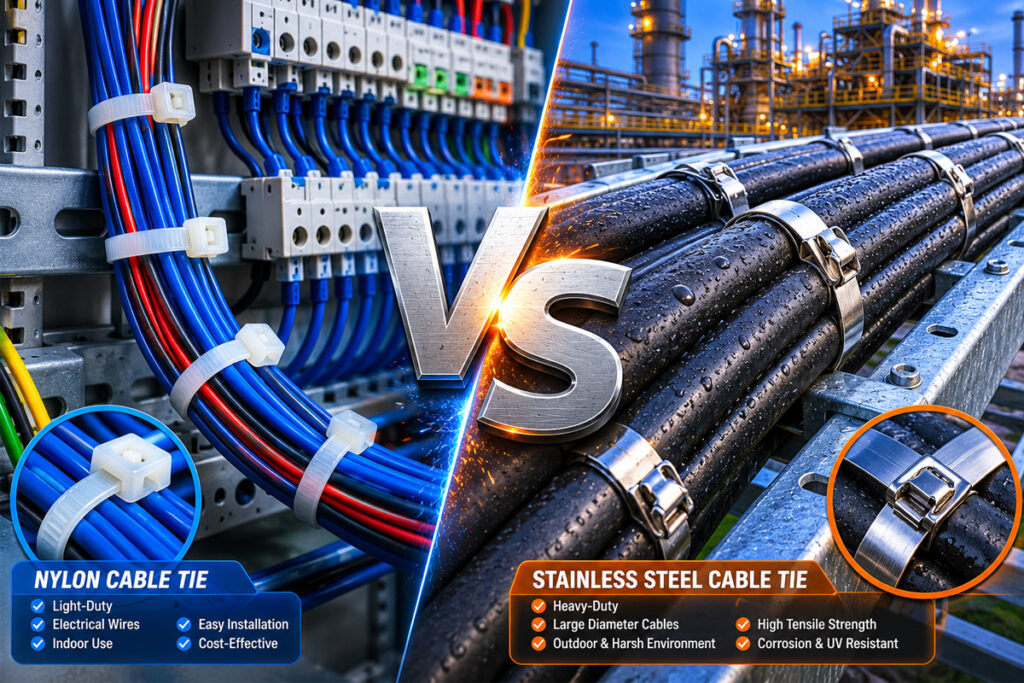
Nylon Cable Ties
Nylon cable ties are typically manufactured from PA66 (Polyamide 66) and are widely used for general cable management.
Advantages include:
- Lightweight
- Cost-effective
- Easy installation
- Electrical insulation
- Available in multiple colors and sizes
They are commonly found in:
- Electrical control panels
- Building wiring
- Home electrical installations
- OEM equipment manufacturing
Stainless Steel Cable Ties
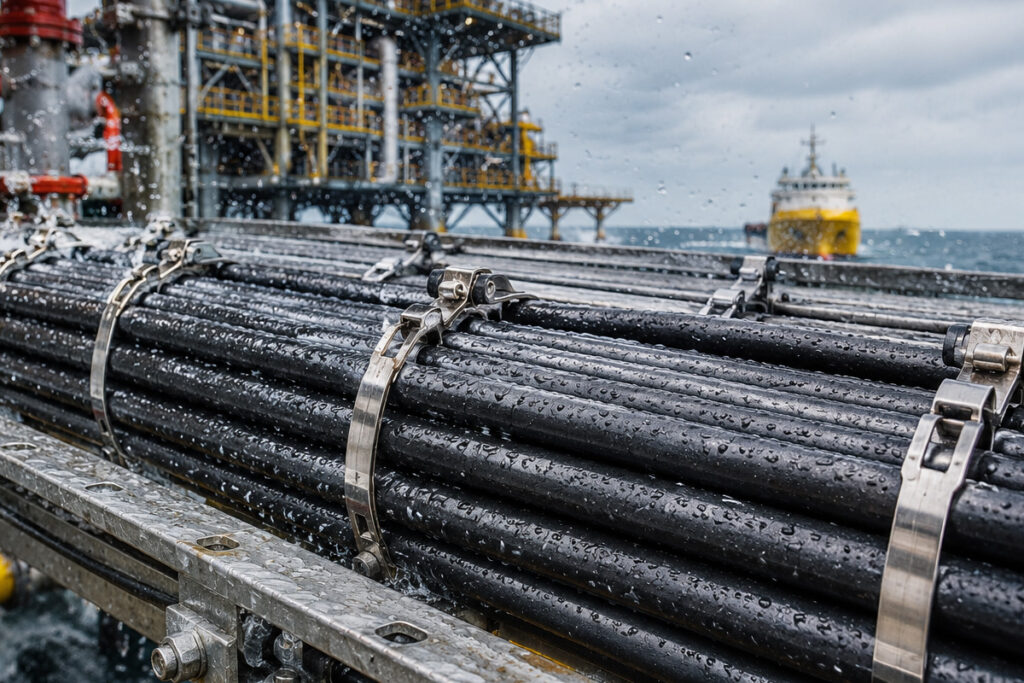
Stainless steel cable ties are designed for demanding environments where strength, corrosion resistance, and durability are critical.
Common materials include:
- Stainless Steel 304
- Stainless Steel 316
Advantages include:
- Extremely high tensile strength
- Corrosion resistance
- UV resistance
- High-temperature resistance
- Long service life
They are commonly used in:
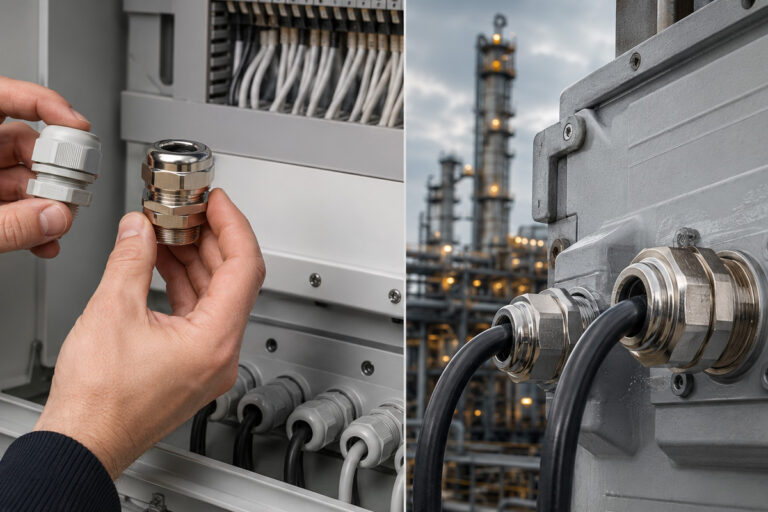
- Marine installations
- Oil & gas facilities
- Solar farms
- Chemical plants
- Offshore platforms
Indoor vs Outdoor Applications
One of the easiest ways to choose a cable tie is by considering where it will be installed.
Indoor Applications
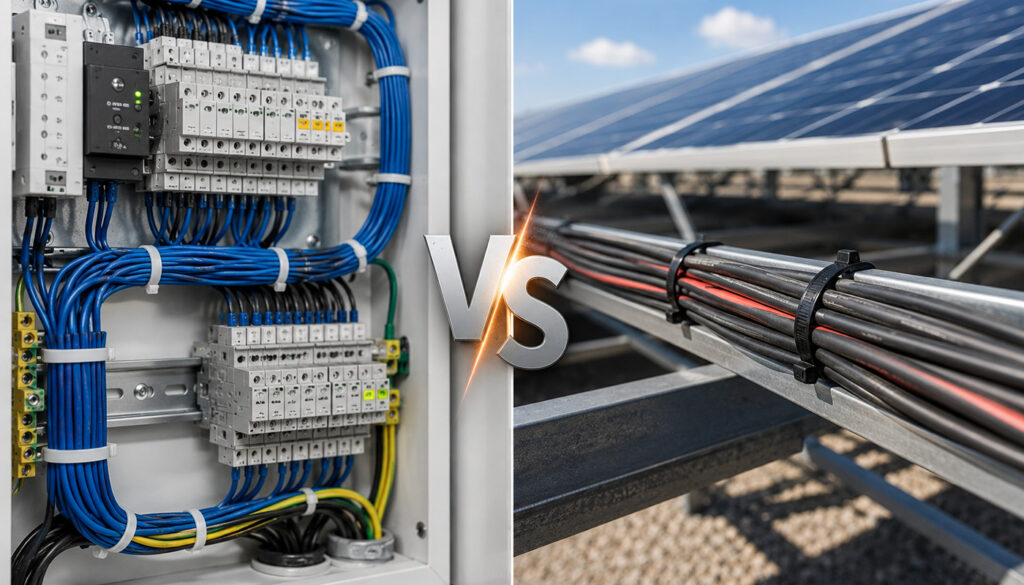
For most indoor environments, nylon cable ties are the preferred solution.
Typical applications include:
- Distribution boards
- Control cabinets
- Data centers
- Building electrical systems
- Industrial automation panels
Indoor environments usually provide protection from sunlight, moisture, and harsh weather conditions, making nylon ties a cost-effective choice.
Outdoor Applications
Outdoor installations require additional consideration.
Natural nylon cable ties can degrade when exposed to direct sunlight over time.
For outdoor use, consider:
- UV-resistant black nylon cable ties
- Stainless steel cable ties
Applications include:
- Solar energy systems
- Telecommunications equipment
- Outdoor lighting
- Utility infrastructure
General Rule:
- Indoor = Nylon Cable Ties
- Outdoor = UV Black Nylon or Stainless Steel Cable Ties
UV Resistance and Weather Resistance
Sunlight is one of the biggest threats to plastic cable ties.
Natural Nylon Cable Ties
Natural-colored nylon ties are primarily designed for indoor use.
Extended UV exposure can cause:
- Discoloration
- Brittleness
- Reduced tensile strength
UV-Resistant Black Nylon Cable Ties
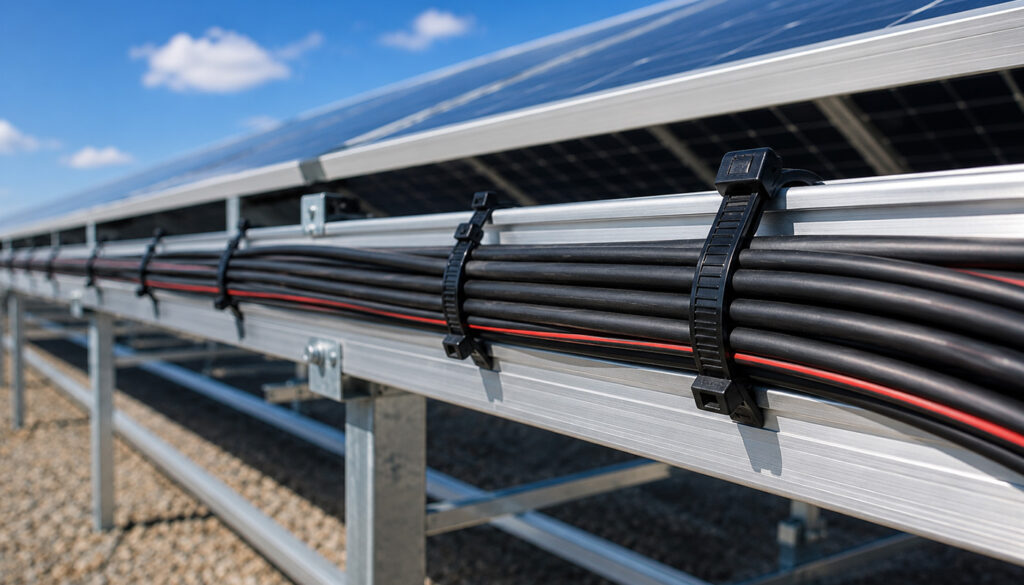
Black nylon cable ties contain carbon black additives that improve UV resistance.
These are suitable for:
- Solar installations
- Outdoor control cabinets
- Rooftop cable management
Stainless Steel Cable Ties
Stainless steel cable ties are unaffected by UV radiation and offer superior resistance to weathering.
They are ideal for:
- Desert environments
- Coastal areas
- Offshore platforms
- Long-term outdoor installations
Corrosion Resistance
Environmental conditions often determine whether nylon or stainless steel is the better option.
Nylon Cable Ties
Nylon does not rust and performs well in many indoor applications.
However, prolonged exposure to:
- Chemicals
- Solvents
- Industrial pollutants
may reduce service life.
Stainless Steel 304 Cable Ties
Suitable for:
- General industrial applications
- Manufacturing facilities
- Outdoor installations
Stainless Steel 316 Cable Ties
Recommended for:
- Marine environments
- Saltwater exposure
- Offshore oil platforms
- Chemical processing plants
When corrosion resistance is critical, SS316 cable ties are usually the preferred choice.
Strength and Load Capacity
Mechanical strength is another major factor.
Nylon Cable Ties
Typical tensile strengths range from:
- 18 lbs (8 kg)
- 40 lbs (18 kg)
- 50 lbs (22 kg)
- 120 lbs (55 kg)
They are suitable for most electrical and cable management applications.
Stainless Steel Cable Ties
Stainless steel ties offer significantly higher tensile strength and are capable of securing:
- Large cable bundles
- Heavy conduits
- Industrial pipes
- Structural installations
For heavy-duty applications, stainless steel cable ties are the clear winner.
Temperature Resistance
Temperature can dramatically affect cable tie performance.
Nylon Cable Ties
Typical operating range:
-40°C to +85°C
Suitable for most commercial and industrial electrical installations.
Stainless Steel Cable Ties
Typical operating range:
-80°C to +538°C
Ideal for:
- Furnace environments
- Engine compartments
- Petrochemical plants
- High-temperature process equipment
If extreme temperatures are expected, stainless steel is the safer option.
Reusability and Maintenance
Maintenance requirements should also be considered.
Standard Nylon Cable Ties
Most standard nylon cable ties are single-use products.
Once tightened, they must be cut for removal.
Releasable Nylon Cable Ties
Special releasable designs allow:
- Reuse
- Temporary installations
- Frequent maintenance
Stainless Steel Cable Ties
Most stainless steel cable ties are also designed for single use, although releasable versions are available for specialized applications.
Neither option is ideal for frequent disassembly, but releasable nylon ties offer greater flexibility.
Installation Convenience
Ease of installation directly affects labor costs.
Nylon Cable Ties
Benefits include:
- Fast installation
- Lightweight handling
- No special tools required
- Safe and comfortable to use
Stainless Steel Cable Ties
Often require:
- Tensioning tools
- Cutting tools
Installation is generally slower and requires more care.
For speed and convenience, nylon cable ties are usually preferred.
Cost Comparison
Budget is always an important consideration.
Nylon Cable Ties
Advantages:
- Low initial cost
- Ideal for high-volume projects
- Widely available
Stainless Steel Cable Ties
Advantages:
- Longer service life
- Lower replacement frequency
- Superior durability
Although stainless steel ties cost more upfront, they may reduce maintenance costs in harsh environments.
Best Applications
The following table provides a quick selection guide:
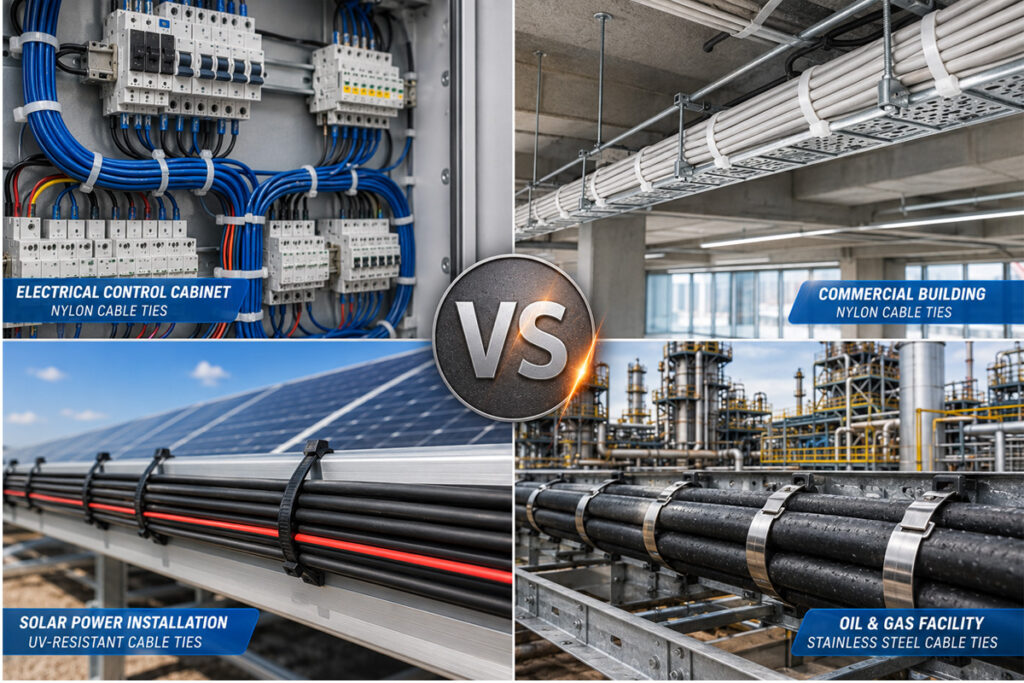
| Application | Recommended Solution |
|---|---|
| Electrical Control Panels | Nylon Cable Ties |
| Building Wiring | Nylon Cable Ties |
| OEM Equipment | Nylon Cable Ties |
| Data Centers | Nylon Cable Ties |
| Solar Installations | UV Black Nylon or Stainless Steel |
| Outdoor Cable Management | UV Black Nylon or Stainless Steel |
| Marine Applications | SS316 Cable Ties |
| Offshore Platforms | SS316 Cable Ties |
| Oil & Gas Facilities | Stainless Steel Cable Ties |
| Chemical Plants | Stainless Steel Cable Ties |
| High-Temperature Areas | Stainless Steel Cable Ties |
| Heavy-Duty Industrial Installations | Stainless Steel Cable Ties |
Final Verdict
There is no single cable tie that works best for every application.
Choose Nylon Cable Ties if:
- The installation is indoors
- Budget is important
- Fast installation is required
- Electrical insulation is needed
Choose Stainless Steel Cable Ties if:
- The environment is harsh
- UV exposure is severe
- Corrosion resistance is required
- High temperatures are present
- Maximum strength is necessary
By evaluating your installation environment, temperature conditions, exposure to sunlight, corrosion risks, and mechanical load requirements, you can confidently select the right cable tie and ensure long-term performance.